
Building Community Through Quality Outdoor Spaces: Creating Places Where People Connect
How Thoughtfully Designed Parks and Recreation Facilities Strengthen Social Connection
In an era where Americans report increased isolation and decreased community connection, outdoor spaces have become more important than ever. Parks and recreation facilities aren’t luxuries—they’re civic infrastructure where neighbors become friends, where children discover joy, where families create memories, and where communities discover their shared purpose. Yet not all outdoor spaces are created equal. The difference between a park that’s actively used and loved and one that sits empty often comes down to thoughtful design and quality amenities. At Hunter Knepshield, we’ve been helping communities across Texas, Oklahoma, Arkansas, and Louisiana create outdoor spaces where people genuinely want to gather for over 55 years. We understand that community building happens when spaces are thoughtfully planned, well-maintained, comfortable, and genuinely welcoming to everyone. From modular restrooms that make extended park visits possible to shade structures that invite families to linger, to playgrounds that delight children across multiple age groups, every element matters. In this guide, we’ll explore what creates outdoor spaces that truly build community—and how strategic investment in quality amenities transforms parks from overlooked green spaces into vibrant centers of neighborhood life.
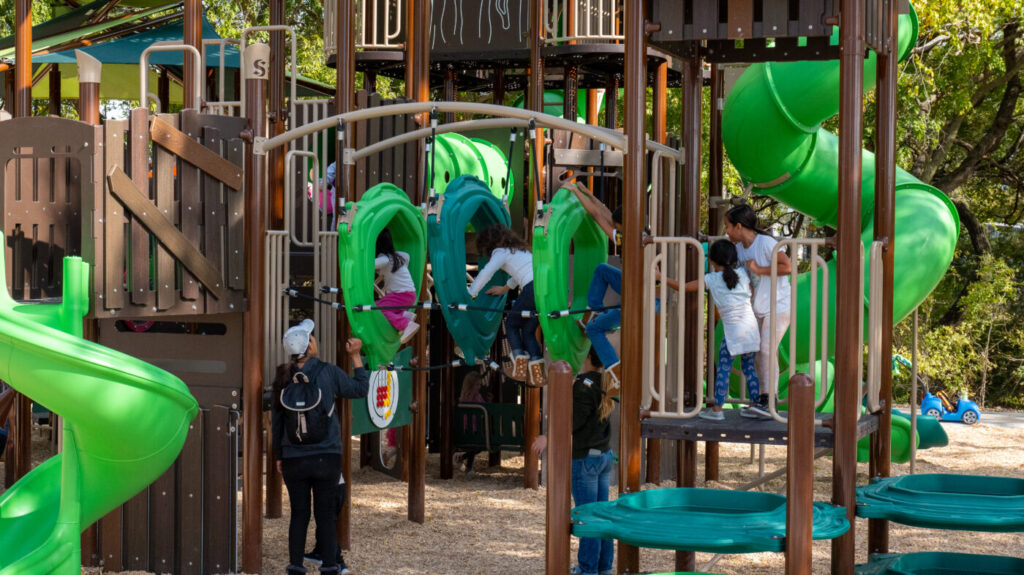
1. Quality Outdoor Spaces Drive Community Engagement and Social Connection
Recent research reveals something remarkable: communities with well-designed, high-quality parks show measurably stronger social connections and civic engagement.
The Research Behind Community Building: A major study comparing renovated parks to non-renovated parks found that people were significantly more likely to visit high-quality parks—66 percent more likely in studied communities. But the impact goes beyond usage. When neighbors gather in attractive, well-maintained spaces, they naturally interact. These casual interactions build the social fabric that holds communities together. Trust for Public Land’s 2024 research found that cities investing in park programming and community engagement saw measurable increases in measures of social capital.
Why This Matters: Parks function as democratic public squares where people from different backgrounds, ages, and income levels naturally encounter one another. In divided times, these shared spaces where community members see each other as neighbors—not strangers—become essential. Parents watch children play together at quality playgrounds. Neighbors exercise in outdoor fitness zones. Teens gather at sports courts. Families picnic at shade-covered tables. These seemingly small moments accumulate into genuine community bonds.
The Amenity Connection: Spaces become gathering places when they’re equipped to support real activities. Families won’t spend time in parks without comfortable restrooms. Elderly residents won’t visit without adequate seating. Young children need age-appropriate playgrounds. Adults need shade during Texas heat. Communities need tables for picnics and programming spaces for events. Quality amenities remove barriers and enable community.
2. Inclusive Design: Creating Parks for Everyone
Thoughtfully designed outdoor spaces must welcome and serve everyone—regardless of age, ability, or background.
Accessibility Matters: Parks that provide accessible playgrounds for children with disabilities, parking for visitors with mobility challenges, and comfortable seating for elderly residents serve broader community demographics. When more people can access and use parks, more diverse groups gather, which strengthens community bonds across age groups and abilities.
Designing for Multiple Activities: The most vibrant parks offer something for everyone. Quality outdoor spaces balance active zones—playgrounds, sports courts, fitness equipment—with quieter spaces for reflection, reading, or conversation. They include shelter from Oklahoma thunderstorms and Texas heat. They provide facilities—restrooms, water fountains, picnic areas—that enable people to spend extended time together. This diversity of activities draws diverse users, creating vibrant, well-used parks.
Age-Inclusive Programming: Parks that serve toddlers, school-age children, teens, young adults, families, and seniors through different amenities and activities attract multigenerational usage. A park with equipment for young children, basketball courts for teens, adult fitness zones, and comfortable seating for seniors becomes a true community gathering place.
3. Well-Maintained Amenities Signal Investment and Care
The condition of park amenities sends a powerful message about whether a community is valued.
Perception Becomes Reality: When facilities are well-maintained, visitors perceive the park as a place worth visiting—worth bringing their families to, worth gathering in. Conversely, broken equipment, vandalized buildings, graffiti, and poor maintenance signal neglect. This perception directly affects usage. Parks that appear cared for are used; parks that appear neglected are avoided.
Low-Maintenance Materials: Quality modular facilities from Hunter Knepshield are engineered with maintenance in mind. Graffiti-resistant materials, durable fiberglass interiors, weather-resistant construction, and thoughtful design reduce maintenance burden on park staff. When maintenance is manageable, facilities stay in excellent condition, maintaining positive community perception.
Sustainable Investment: Communities investing in quality amenities make decisions that pay dividends for years. A well-built modular restroom facility serves the community for decades. Professional-grade playground equipment designed with quality materials and proper installation remains safe and attractive much longer than budget alternatives. Shade structures built to last provide comfort season after season. This long-term thinking demonstrates commitment to community.
4. Programming and Activity: Bringing Spaces to Life
Quality spaces become community gathering places when they host activities and programming.
Community Programming: Parks with regular programming—concerts, fitness classes, seasonal events, farmers markets, community celebrations—transform into true community centers. These programs provide reasons for people to gather and reasons to return regularly. Quality facilities that support programming—covered pavilions, restrooms, water access, parking—enable communities to host events that build connection.
Flexible Spaces: Parks designed with flexible amenities can host diverse programming. A quality covered shelter can serve as a community gathering space year-round. Open play areas accommodate both spontaneous gathering and organized events. Multiple activity zones allow different groups to use the park simultaneously—families in play areas, teens at sports courts, adults at fitness equipment, seniors at seating areas.
Supporting Neighborhood Identity: Parks become places where communities celebrate themselves. Quality facilities enable neighborhoods to host cultural events, seasonal celebrations, and community traditions that strengthen neighborhood identity and pride.
5. Investment in Community Health and Wellbeing
Quality outdoor spaces contribute directly to community health through increased physical activity, mental wellness, and social connection.
Physical Activity and Mental Health: Research shows that access to high-quality outdoor recreational spaces increases physical activity among community members of all ages. People who use parks for exercise report improved physical health. Time spent in green spaces reduces stress and mental fatigue. The combination creates communities where residents are healthier—both physically and mentally.
Equity and Access: Communities that invest in quality outdoor spaces in all neighborhoods—not just affluent areas—support equitable health outcomes. Parks are among the most efficient public health investments communities can make.
Ready to Strengthen Your Community Through Quality Outdoor Spaces?
Community building doesn’t happen by accident. It happens when neighborhoods invest in spaces where people want to gather, where families feel welcome, where amenities support extended time together, and where maintenance demonstrates ongoing care. Hunter Knepshield specializes in helping communities across Texas, Oklahoma, Arkansas, and Louisiana create these transformative spaces. Whether you’re planning new parks, renovating existing facilities, or addressing specific community needs, our expertise in modular facilities, playgrounds, shade structures, and site amenities can help you build spaces where your community flourishes.
Ready to transform your park into a true community gathering place? Contact Hunter Knepshield today for a consultation. Let’s discuss how quality outdoor amenities can strengthen your community, increase park usage, and create the gathering spaces your neighborhood deserves. Call us today to get started.