
Recess and the Brain: Does Physical Activity at School Actually Improve Test Scores?
How Quality Playground Design Supports Cognitive Development, Classroom Focus, and Academic Achievement
There has long been a temptation in education policy to view recess as a trade-off, time taken away from academics in exchange for children to run around. The research is now clear enough that this framing deserves to be retired entirely. Physical activity during the school day, including unstructured outdoor play, is not a break from learning. It is part of how learning happens. At Hunter Knepshield, we have spent decades helping schools, parks, and communities build playgrounds that do more than keep children occupied during the school day. We design and install outdoor play environments that support the full development of children, cognitive, physical, social, and emotional. As one of the largest suppliers of commercial playground equipment in the United States, we understand that the quality and design of a playground directly influences how much children benefit from the time they spend on it. The science of recess and brain development is a conversation every school administrator and parent deserves to hear.
What the Research Actually Shows
The evidence connecting physical activity to academic performance has grown substantially in recent years. Multiple studies and systematic reviews now support the conclusion that time spent in physical activity during the school day, including recess, is consistently associated with improved academic outcomes rather than reduced ones. Research has identified mathematics and reading as the subjects most positively influenced by physical activity, and both depend heavily on executive function, the set of mental skills that include focus, working memory, and cognitive flexibility.
Research has also found that daily recess provides an emotional reset for students, enabling them to disengage temporarily from academic pressure and return to the classroom with measurably improved focus and calm. Recess-time physical activity is widely recognized as one of the most cost-effective and inclusive ways to support children’s mental health and cognitive readiness without adding academic burden.
Perhaps most importantly for school administrators facing pressure around standardized testing: the research does not support the idea that reducing recess to create more classroom time improves outcomes. In many cases, it does the opposite. Children who are physically active during the school day are more attentive, better regulated, and more productive when they return to their seats.
How Movement Affects the Brain
The connection between physical activity and cognitive performance is not incidental. It is neurological. Aerobic exercise increases blood flow to the brain, stimulates the release of proteins that support the growth and maintenance of neurons, and activates the prefrontal cortex, the region responsible for attention, planning, and impulse control. These effects do not require a full gym session. Even a brief outdoor recess period that includes moderate-to-vigorous movement is enough to produce measurable improvements in post-recess attention and on-task behavior.
Children who receive adequate daily physical activity, including recess, also demonstrate stronger performance in the soft skills that directly support academic achievement: self-regulation, problem-solving, and the ability to persist through challenging tasks. These are not peripheral benefits. They are central to what makes a child ready to learn.
Why Playground Design Determines How Much Children Move
Not all recess is equally effective at producing these benefits, and that is where playground design becomes a direct educational concern. Research consistently shows that the environment of a playground shapes how much time children spend in moderate-to-vigorous physical activity during recess. The quality of the outdoor space is a lever that directly affects activity levels, which is exactly why schools that take academic outcomes seriously take their playground environments seriously too.
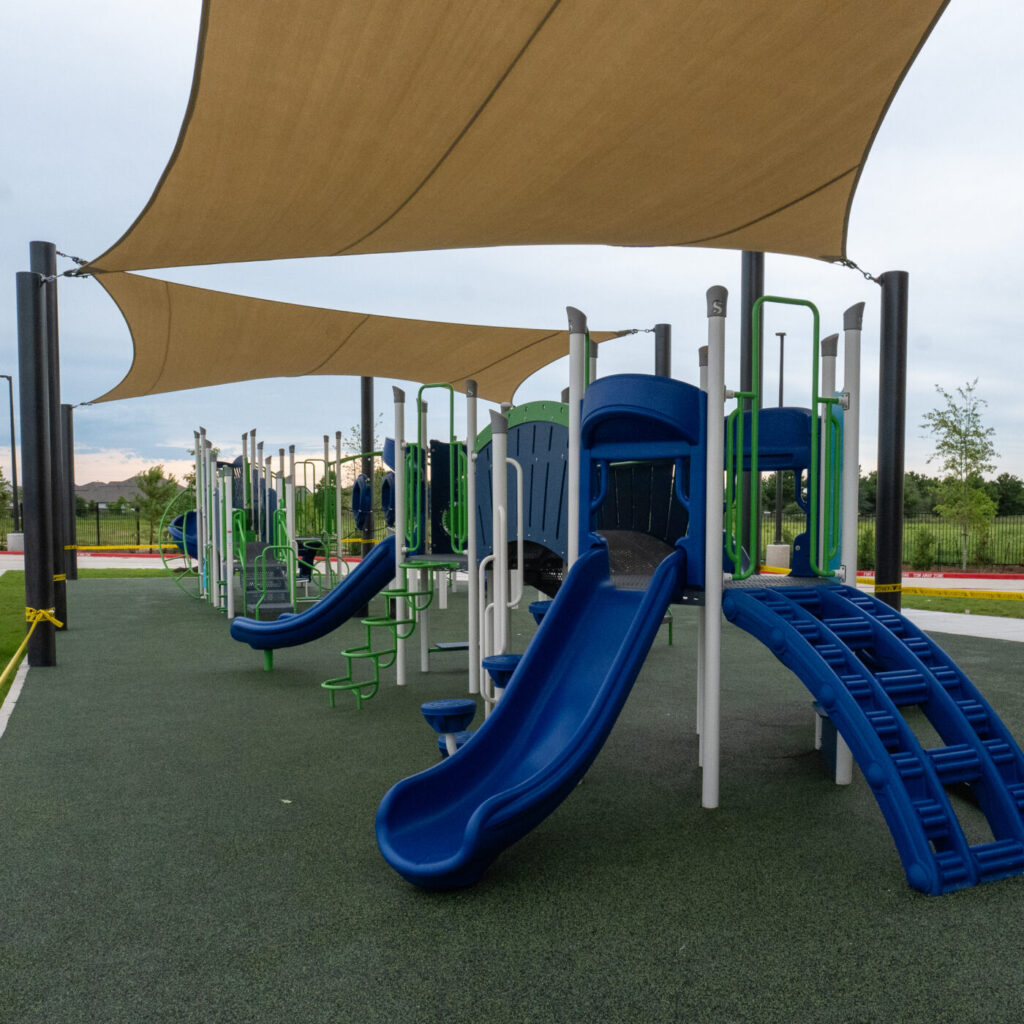
Playgrounds that offer varied, engaging equipment for different age groups and interests encourage more active play. Inclusive designs that welcome children of all abilities ensure that every student benefits from outdoor time, not just those who are already physically confident. Shaded structures also matter, particularly for schools in warmer climates where heat can limit how long children safely remain active outdoors. A well-shaded playground extends usable recess time across more of the school year.
At Hunter Knepshield, we work with school districts to design playgrounds that maximize active engagement, meet ADA accessibility requirements, and hold up to the demands of daily use. Every project begins with an understanding of the specific student population, the available space, and the goals of the school community.
Turning the Research Into Action
For school administrators and school board members making decisions about outdoor spaces, the research points in a consistent direction: investment in quality playground environments is investment in academic outcomes. Schools that prioritize recess as a protected, well-designed part of the school day are not sacrificing academic time. They are creating the conditions under which academic time becomes more productive.
Most school-age children currently fall short of daily physical activity recommendations. Schools are uniquely positioned to change that, and a well-designed, well-equipped playground is one of the most direct tools available.
Ready to Build a Playground That Supports Learning Inside and Outside the Classroom? Contact Hunter Knepshield Today.
Whether you are planning a new playground from the ground up or upgrading an existing outdoor space, our team is ready to help you design a solution that fits your school’s needs, your budget, and the children you serve. Contact Hunter Knepshield to schedule a consultation and discover what a truly purposeful playground can do for your students.